Tag: writing

  • ” Thanks for the Invitation.  Where’s the Nearest  Motel 6? “

    ” Thanks for the Invitation. Where’s the Nearest Motel 6? “

    “We’d love to have you stay with us!”

    Very kind. Very generous.

    Very dangerous.

    I love visiting friends and family. Dinner, conversation, a few laughs. But somewhere between “Have another cup of coffee” and “We’ve already made up the guest room,” I start checking hotel availability under the table.

    At 75, I know what I need: a comfortable mattress, a nearby bathroom and the ability to leave a room without explaining where I’m going.

    Being a houseguest complicates all three.

    “Don’t be silly. Why spend money on a hotel? Stay here. You’re part of the family!”

    That sounds wonderful until you remember what being part of a family actually involves.

    Make yourself at home. Within limits.

    “Help yourself to anything in the refrigerator!”

    So I do.

    I find a strawberry popsicle in the freezer. Perfect. I unwrap it, take a bite and suddenly a snot-nosed kid appears, screaming like I’ve just backed over his bicycle.

    Apparently, it was HIS strawberry popsicle.

    Nobody mentioned that the freezer had property rights.

    Now his mother is looking at me like I stole his college fund, and I’m trying to figure out whether offering him the uneaten half will improve the situation.

    It doesn’t.

    The guest bedroom.

    “ That used to be our mattress before we got the new one.  It’s been a comfy one. We actually got it on sale at Discount Mattress the year we were married 25 years ago.”

    It might be comfy if you like a mattress which dips like the Grand Canyon.

    The bed also comes with enough decorative pillows to furnish a small hotel. I spend ten minutes removing them, then try to decide what to do with them.

    Do I make the bed? Strip the bed? Fold the sheets? Take to washer?  Not an issue at Motel 6.

    Worst of all…It happens to be the popsicle kids bedroom.   He is having a full drama workshop because he has to snuggle on the couch shared with Princess, their prized white standard poodle.

    This ain’t going to end well.

    Then there’s the guest bathroom.

    It’s booked solid all morning.

    Someone’s showering. Someone’s doing their hair. Someone’s in there so long I begin to wonder whether there’s another exit.

    When I finally get in, the toilet overflows.

    My fault, of course.

    Six people have been using it since dawn, but I’m the one standing beside it when the water comes over the rim. That makes me the prime suspect.

    Now I’m holding a plunger, standing in an inch of water and explaining that there was a preexisting condition.

    The toilet’s.

    Fortunately, there are six beautiful towels right in front of me.

    Unfortunately, they’re the guest towels.

    Guest towels are not for guests.

    You would think the name settles the question.

    It doesn’t.

    “You didn’t use those, did you?”

    Of course not. I dried my hands on my pants like a civilized houseguest.

    Those towels are part of the bathroom decor. They’re folded, layered and arranged in a way that suggests touching one might trigger an alarm.

    Meanwhile, the toilet is flooding the bathroom.

    I look at the water. I look at the towels.

    Apparently, we’d rather lose the floor.

    So what about Princess the family poodle.

    She has a beautiful poodle hairdo, manicured nails and absolutely no respect for my personal space.

    She wants to be petted. Then scratched. Then petted again.

    She sniffs me, jumps onto the couch and, just when I relax, sticks her nose in my crotch.

    “She likes you!”

    I’d prefer a handshake.

    The family is oblivious. They cannot imagine anyone not adoring their little Princess.

    Princess gets seven premium gourmet meals delivered every week by FedEx Priority.

    “We certainly can’t allow her to eat processed food.”

    I nod while eating my hot dog.

    The dog’s dinner arrived in an insulated container. Mine came in a package of eight.

    I’m tempted to slip her a bite, but I can already see how that ends: Princess makes a deposit on the living room carpet, and I’m responsible for another plumbing problem.

    I keep the hot dog to myself.

    I’m already wanted in connection with a popsicle.

    Don’t borrow their car.

    “Need to run to Walgreens? Take ours!”

    Good chance the gas gauge will be below a quarter tank.

    I can’t return it nearly empty. That would be rude.

    So I fill it.

    Then, under the gas station lights, I notice it could use a wash.

    They’ve been so nice to let me use it. It’s the least I can do.

    Seventy dollars to run to Walgreens.

    Uber would have been fifteen.

    And there’s no such thing as doing nothing.

    At a hotel, I can sit quietly with a cup of coffee and stare out the window.

    At someone’s house, that causes concern.

    “Are you bored?”

    No.

    “Would you like the television on?”

    No.

    “We could go somewhere.”

    I was enjoying being here until we started discussing it.

    If I go to the guest room, I’m antisocial. If I stay in the living room, I need entertaining. If I put my shoes on, someone asks where I’m going.

    I begin to understand why Princess is so excited when the door opens.

    Eventually, we make our escape.

    We pack. We check the drawers. We check the bathroom. We load the car.

    Hugs all around.

    “We loved having you!”

    “We had a wonderful time!”

    Nobody mentions the toilet.

    We pull away, turn the corner and finally relax.

    Then:

    “Did you get the pills?”

    Of course not.

    Somebody always leaves something. Pills, underwear, a toothbrush. There’s always one little item determined to extend the visit.

    We turn around.

    The door opens.

    “Hey! Come on in and have a cup of coffee before you head back. We still have a few popsicles left. And Princess fell in love with you!”

    “Wow, we’d love to, but Jane is not feeling well.  Believe she has COVID, and we sure don’t want to spread it.”

    Jane is perfectly healthy.

    She’s in the car with her seat belt fastened, supporting the diagnosis.

    They hand over the pills. We say goodbye again.

    This time, we keep driving.

    I do appreciate the invitation. I appreciate the hospitality, the meals and the effort people make to welcome us.

    And I’d like us all to remain friends.

    Which is why, before our next trip, I’ll be saying a little prayer.

    The Houseguest Serenity Prayer

    God, grant me the serenity to decline their invitation,

    the courage to book a room at Motel 6,

    and the wisdom to keep that reservation.

    Keep the light on

    Amen

    And please, Lord, let the towels be for drying.

    More stories at:  crazyfamily.blog
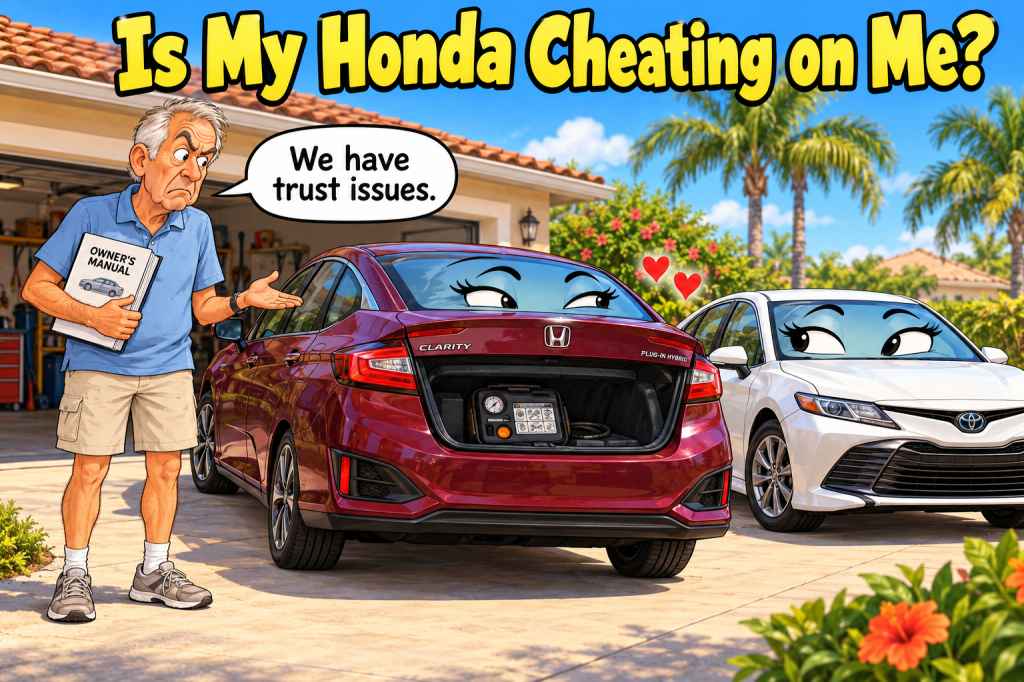
  • Is My Honda Cheating on Me?

    Is My Honda Cheating on Me?

    For more than 60 years, I’ve been driving all kinds of vehicles. Old, new, damaged, dirty. Some barely worth the gas in the tank.

    But one thing was almost always in excellent condition.

    The owner’s manual.

    Untouched. Unread. Practically suitable for resale.

    In all those years, I’ve opened one to check tire pressure, locate the spare tire, and find a place to stuff my registration and insurance card.

    Otherwise, it’s been a time capsule in the glove compartment.

    I don’t know how much time I have left on this earth, but I figured I ought to read an owner’s manual before I’m whisked off to my final destination.

    Preferably somewhere with valet parking.

    For years, I thought I understood the basic operating system:

    If something lights up red, pull over.

    If something lights up yellow, hope it goes away before the next oil change.

    Apparently, Honda had a more detailed plan.

    My Honda Clarity has features I’ve never used, settings I didn’t know existed, and buttons whose purpose I’ve never questioned.

    We’ve spent more than 100,000 miles together, and apparently we barely know each other.

    What’s it keeping from me?

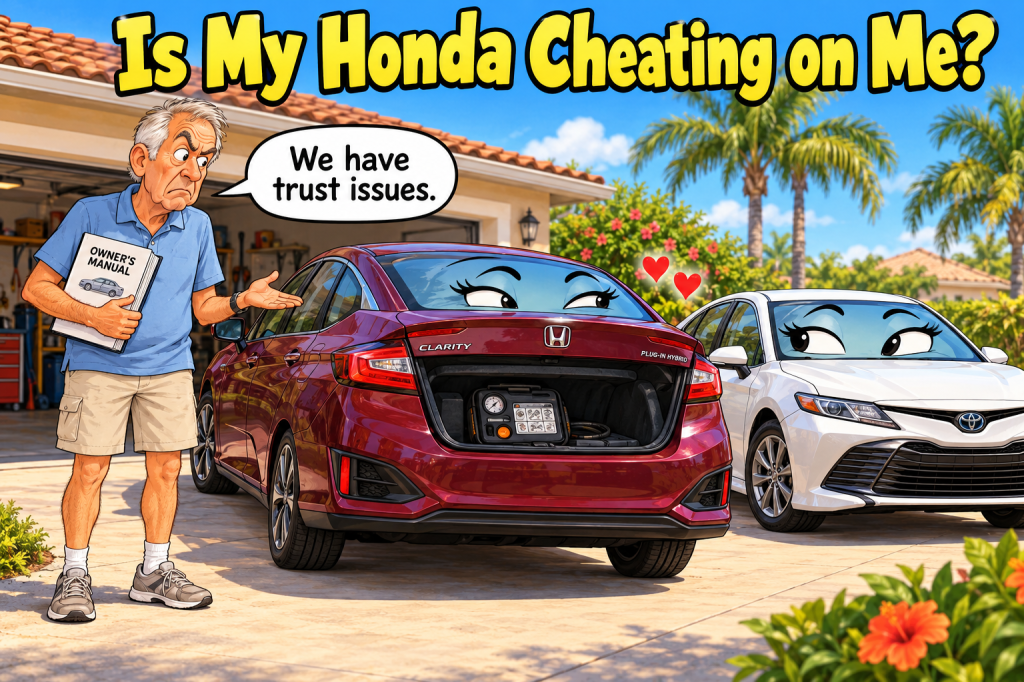
    Is it cheating on me?

    I could care less if it’s winking and tooting at some cute Toyota.

    I know who’s coming home to my garage.

    Still, I decided to investigate.

    I felt like Geraldo Rivera in 1986, opening Al Capone’s vault. He found practically nothing.

    At least my glove compartment had an insurance card.

    I opened the manual.

    There are thousands of parts in this car. I’m familiar with about eight:

    Accelerator.

    Brake.

    Shifter.

    Power windows.

    Wipers.

    Air conditioning.

    Seat belts.

    And the steering wheel. Almost forgot that one.

    I’d include the emergency flashers if I could find the damn button.

    The investigation immediately became complicated.

    Apparently, Honda wrote the manual for people who already knew what everything meant.

    SRS: Supplemental Restraint System.

    Airbags.

    Why didn’t you just say airbags?

    “Supplemental restraint” sounds like something the nuns used after the regular restraint stopped working.

    TIN: Tire Identification Number.

    My tires have identification numbers?

    They already have more writing on them than my college diploma. Now I’m supposed to learn their identities?

    I’ve been calling them front left, front right, and the other two.

    TPMS: Tire Pressure Monitoring System.

    Finally. An old friend.

    That warning light has been on for so long I consider it part of the dashboard décor.

    I swear graduate engineers from MIT couldn’t figure it out.

    My method has been to get out and look.

    Apparently, Honda expects an actual pressure gauge.

    Another accessory to read about.

    Energy Flow Monitor.

    There’s a diagram showing where the power is coming from and where it’s going.

    Engine. Battery. Wheels. Little arrows.

    I thought pushing the accelerator settled that discussion.

    Now I’m supervising a utility company.

    Deceleration Paddle Selector.

    This lets you change how strongly the car slows down when you take your foot off the accelerator.

    The paddle I remember from third grade at St. Matthew’s accomplished much the same thing.

    Stopped me immediately.

    Then I discovered what appeared to be the Anti-DUI Package.

    Vehicle Stability Assist.

    Road Departure Mitigation.

    Collision Mitigation Braking System.

    Lane Keeping Assist System.

    Adaptive Cruise Control with Low-Speed Follow.

    The car can help keep me stable, help keep me in my lane, warn me about leaving the road, and help me avoid running into somebody.

    Of course, none of that makes it a designated driver.

    But it does raise a question.

    If my Honda knows how to do all this, why have I been doing all the work?

    Then there’s an acoustic alerting system so people can hear the car coming when it’s running quietly on electricity.

    Even my Honda has learned that sometimes you have to make a little noise to get noticed.

    We have that in common.

    By this point, I was running out of time.

    Not battery time.

    Earth time.

    I closed the manual. Whatever else my Honda was up to, it could keep to itself.

    I only wanted to settle one thing.

    Where was the spare tire?

    I looked it up.

    There isn’t one.

    Honda gave me a tire repair kit.

    More than 60 years of ignoring owner’s manuals, and the first time I finally read one, I discover the car has been withholding a tire.

    Forget the Toyota.

    We have trust issues.

    Read more stories at:  crazyfamily.blog 

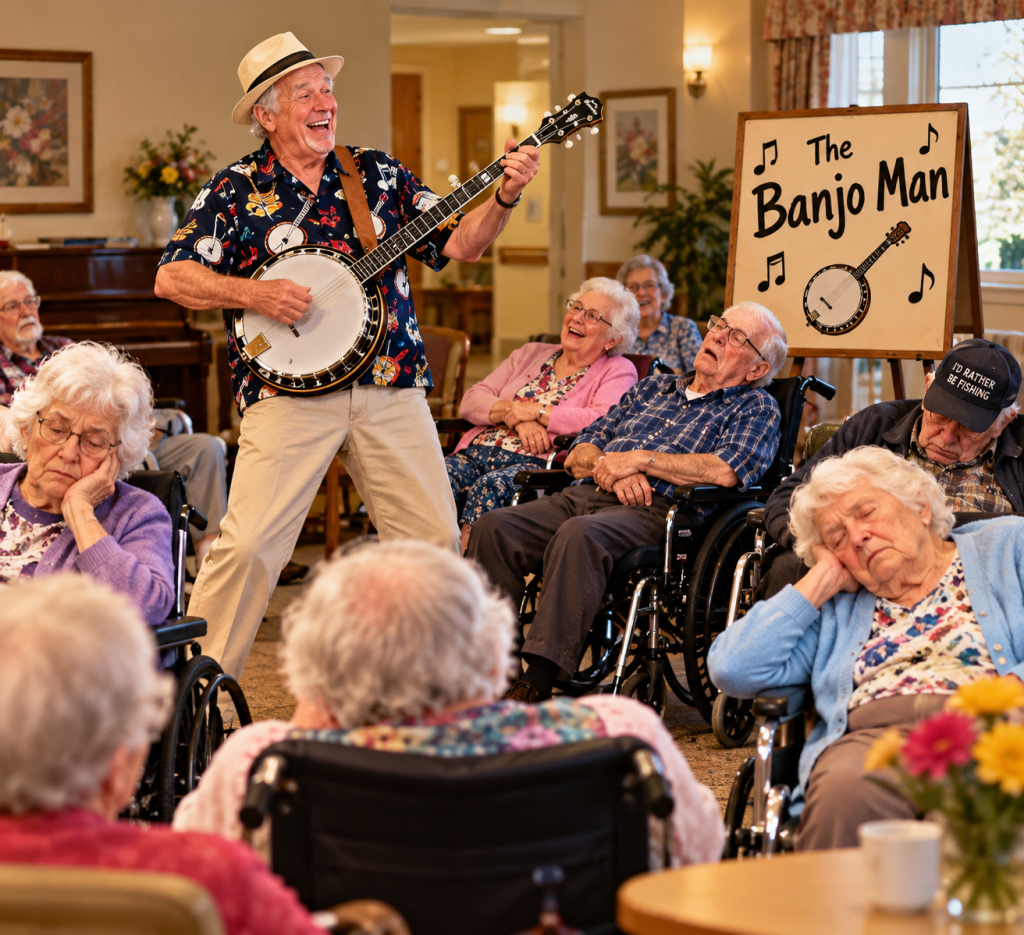
  • Who the Hell Plays a Banjo?

    Who the Hell Plays a Banjo?

    Me…for 70 years.

    Apparently, it started when I was an infant. I’d get on all fours in my crib, rock back and forth, and bang my head against the front panel.

    The doctor told Mom this could be a sign of future musical ability and suggested trying an instrument when I got older.

    At six, Mom asked, “How would you like to take banjo lessons?”

    “Yeah, I guess. I don’t have much else going on. But can I finish Mighty Mouse first?”

    Mom and Dad loved Dixieland music from the ’20s and ’30s. She didn’t like guitars, so my musical future had already been decided.

    We finally found a banjo in a pawn shop. Even in the mid-’50s, people were hocking them. Today, you can hardly walk into a pawn shop without seeing two or three hanging in the back.

    Apparently, plenty of mothers had the same idea.

    By ten, Mom had signed me up for weekly half-hour lessons at $2.50 a session. I took the city bus—ten cents—from St. Matthew’s Grade School to Copp Music Center in South Bend.

    After three months, it was getting boring. Other kids were listening to the latest ’50s hits. I was trying to perfect “Let Me Call You Sweetheart.”

    My friends had rock ’n’ roll. I had their grandparents’ wedding music.

    I wanted to quit.

    Mom responded with my first entrepreneurial opportunity: she paid me a penny a minute to practice.

    An hour earned me sixty cents. In those days, that bought a lot of Tootsie Rolls.

    My musical passion suddenly returned.

    I kept playing through grade school talent shows and high school bus trips. Once I learned the school fight song, “Yankee Doodle Dandy,” and “Row, Row, Row Your Boat,” I had enough material to entertain a captive audience.

    And on a bus, they really were captive.

    Over the years, I learned a bunch of old Dixieland favorites, played parties, wrote and performed commercials, and composed company songs. One company even hired me to travel around the country entertaining and writing songs for their customers. 

    Mom’s penny-a-minute investment was paying off.

    One of my claims to fame was writing and singing a political fight song for a congressional candidate. He was so impressed that he had me travel throughout the district performing it at rallies.

    Then came Election Day.

    He lost by the biggest margin in Indiana history.

    I don’t put that one on my résumé.

    At Notre Dame, I was cited for playing the Notre Dame Victory March across campus after a few too many adult beverages.

    School spirit apparently had a volume limit.

    In Germany, I got kicked out of the Hofbräuhaus for playing my banjo while the oompah band was on break.

    The waitresses—the muscular ones who could carry eight mugs of beer at once—picked me up and carried me outside.

    I continued my performance beneath an apartment window.

    A woman on the second floor poured a bucket of water on me for waking up her kids.

    My first outdoor concert came with a complimentary shower.

    I’ve also played at dozens of assisted living facilities and nursing homes. My strongest market has always been the over-sixty crowd.

    Unfortunately, my audience keeps dwindling.

    And at seventy-five, I’m now part of my own target market.

    But my most memorable performance had nothing to do with politics, beer, or buckets of water.

    I was playing at a nursing home when I noticed the nurses were crying.

    What had I done?

    They told me one resident hadn’t communicated in any form for six months.

    When I played “Let Me Call You Sweetheart,” she started singing.

    The song I’d been so bored trying to learn as a kid had reached someone nobody else could reach.

    That one stayed with me.

    Of course, I don’t always keep things quiet. Sometimes I go into my version of Rod Stewart—jumping around, singing, and leading the crowd through the Hokey Pokey.

    After one particularly energetic performance, my sister’s high school friend asked her:

    “Has your brother always been like this?”

    I took that as a compliment.

    After seventy years, I’ve heard every banjo joke there is.

    “If you put a banjo and an accordion in a canvas bag and throw it off the Empire State Building, which one breaks first?”

    “Who cares?”

    Well, my banjo is still intact. It’s taken me across the country, gotten me thrown out of a German beer hall, helped a politician lose spectacularly, and brought a song back to a woman who hadn’t spoken in six months.

    It’s been a real fun run.

    And I still have a few Tootsie Rolls left.

    More stories at : crazyfamily.blog

  • Congress:  What Are We Getting for Our Money?

    Congress: What Are We Getting for Our Money?

    If I invested $2 million in a business, I’d want to know what it was doing for its customers.

    So I have a question about Congress: What are we getting for our money?

    A typical U.S. representative earns a salary of $174,000. Add the average authorized budget to run the office, and the annual figure is about $2.1 million. For a senator, it is about $4.8 million. Most of that money pays for staff and official operations. It does not go into the member’s pocket. (everycrsreport.com⁠)

    That is a substantial public investment. What return should we expect?

    To me, the first responsibility is clear: represent the people back home. Constituents are the people who live in the district or state, including those who voted for someone else. They deserve an office that listens, responds, helps them navigate federal agencies, and brings their concerns into decisions in Washington.

    Members also have national responsibilities. They vote on legislation, serve on committees, and oversee federal agencies. Those duties can have a direct effect on the people they represent.

    But how does a member divide the day among all of it?

    Turn on the television and you may see a familiar face discussing the latest fight in Washington. Turn to another channel, and there’s another interview. Meanwhile, there are committee meetings, votes, constituent requests, and the continuing effort to raise money for the next election.

    I’m not suggesting an interview is automatically a waste of time. Explaining a vote or an issue can be part of the job. I am asking a question we cannot answer by counting the days Congress is in session:

    How much of a member’s time goes toward serving constituents, and how much goes toward building a national profile and getting reelected?

    There are two money systems here. Taxpayers fund the congressional office. Donors fund campaigns and political committees. Individuals and PACs can contribute to candidates within legal limits; Super PACs can raise unlimited amounts for independent political spending. That campaign money is separate from the office budget, but fundraising still makes a claim on a politician’s time. (fec.gov⁠, fec.gov⁠, fec.gov⁠)

    Representatives face reelection every two years. Senators serve six-year terms. Winning an election tells us who voters chose. It does not tell us whether someone who called the office got a response, whether a federal-agency problem was followed through, or whether local concerns were heard. (uscode.house.gov⁠)

    In business, I couldn’t tell my clients, “You’ll get a chance to review my performance in two years.” They’d tell me what was going wrong long before then.

    Why not ask constituents?

    I’d like each congressional office to publish an annual report on its work and invite independent feedback in years when its member is not on the ballot. Ask constituents straightforward questions:

    • Did the office respond when you contacted it?
    • If you asked for help with a federal agency, was the follow-up useful?
    • Does the member explain how national issues affect this district or state?
    • What local concern needs more attention?

    Publish the questions, how the survey was conducted, how many people responded, and the results. An open online poll could be a place to hear comments, but it shouldn’t be presented as the opinion of everyone in the district or state.

    Then tell us what the office intends to do with the answers.

    That seems like a reasonable request when we are investing millions of dollars a year in each office. We should be able to see the work, hear from the people it serves, and ask whether our representatives are giving those people enough of their time.

    After all, we’re the constituents. We’re also paying the bill.

    More stories…. Crazyfamily.blog

  • At 75, I Went to the Hospital. The Confusion Started Immediately.

    At 75, I Went to the Hospital. The Confusion Started Immediately.

    At 75, I thought I had a reasonably good command of the English language.

    Then I went to the emergency room.

    Apparently, hospitals have stopped using English.

    Going to the ER used to be simple. You walked in and said, “I’m sick.”

    Someone looked at you and said, “Okay. Sit down.”

    Not anymore.

    Today, before anyone determines whether you’re actually going to live, you first have to prove who you are, where you live, who your doctor is, what medications you take, what you’re allergic to, who should be called if you die and whether you have any idea why you came there in the first place.

    Then they hand you an electronic pad.

    “Sign here.”

    I signed.

    “Here.”

    I signed again.

    “Initial here.”

    Then another signature.

    After signing enough documents to buy a house, refinance it and leave it to my children, I was beginning to develop carpal tunnel syndrome.

    I finally asked what I had agreed to.

    Apparently, everything.

    Treatment. Privacy. Release of information.

    And HIPAA.

    HIPAA protects your medical privacy, which is reassuring. Apparently, before HIPAA, hospital employees just wandered around telling people:

    “Hey, did you hear what Voll has?”

    Now they can’t tell anyone anything.

    Occasionally, including you.

    I picture a courtroom.

    “Mr. Voll, how do you plead?”

    “Not guilty.”

    “Your Honor, due to HIPAA regulations, we’re unable to tell the defendant what he’s charged with.”

    “Excellent. Proceed.”

    Eventually, a nurse appeared.

    “Mr. Voll, we’re ready for your triage.”

    My what?

    At 75, I thought I’d heard just about everything.

    Apparently not.

    I looked around.

    There was a nurse.

    There was me.

    I wasn’t sure who the third person was supposed to be.

    Then I realized she’d said triage.

    Not threesome.

    That was disappointing.

    Apparently, triage is where they decide how quickly you need medical attention.

    Blood pressure. Temperature. Pulse. Oxygen.

    Then came the big question.

    “On a scale of one to ten, how severe is your pain?”

    I’ve never understood that question.

    What exactly is a ten?

    Kidney stone?

    Shark attack?

    Notre Dame losing to USC?

    Give me some parameters.

    Eventually, the doctor came in.

    That’s when I discovered there’s another language you need to learn before going to the hospital:

    Abbreviations.

    MRI. PSA. IBS. ICU.

    I decided to translate them myself.

    MRI — Might Reveal Injury

    PSA — Prostate Says Attention

    IBS — I Better Sprint

    And my personal favorite:

    ICU — I See You

    That one seems unnecessarily obvious.

    If I’m lying in intensive care and the nurse walks into the room, I already know she sees me.

    Then the doctor started speaking fluent Hospital.

    “Your CBC looks okay, but I’d like a CMP, maybe a CT, and then we’ll have you follow up with your PCP.”

    I nodded thoughtfully.

    “Absolutely.”

    I had absolutely no idea what he’d just said.

    But at 75, I’ve learned something important.

    If a doctor uses more than three abbreviations in one sentence, just nod.

    Eventually, I made it out of the ER.

    I survived Registration.

    I survived HIPAA.

    I survived the pain scale.

    I even survived the alphabet.

    And I learned one very important lesson about modern medicine:

    The next time a nurse tells me she’s ready for my triage—

    I’m going to listen very carefully before getting too excited.

  • Grandpa AD Mac: The King of the Prank

    Grandpa AD Mac: The King of the Prank

    Every family has its legends.

    Some are remembered for wisdom.

    Some for business success.

    And some — like my Grandpa AD Mac — are remembered for sheer mischief.

    Grandpa and Grandma Irene built a successful Michigan bean-processing business. When asked how he became so successful? “

    “Simple…it’s our slogan. “Eat our Beans and Let Us Hear from Ya”, but that isn’t why we still talk about him.

    We remember the pranks.

    The one-liners.

    And the stories that still get told at family gatherings decades later.

    Grandpa summed up his feelings about grandchildren perfectly:

    “You kids bring me double happiness — happy when you come, and happy when you go.”

    That pretty much tells you everything you need to know about Grandpa.

    He was quick with a line, fearless with a prank, and always looking for his next victim.

    The Bean Business

    By day, Grandpa and Grandma Mac ran a fast-growing Michigan bean-processing company.

    They worked hard.

    They built a successful business.

    But once Grandpa left the factory, beans took a back seat to entertainment.

    And Grandpa was usually the entertainment.

    The Funeral Lady

    One of Grandpa’s best friends was a small-town funeral director who had a problem.

    There was a little old lady in town who regularly checked the obituaries and attended funerals for people she barely knew.

    She had a routine.

    Sign the guest book.

    Walk up to the casket.

    Lean over the deceased.

    Whisper:

    “I knew him well.”

    Then head straight for the sandwiches and lemonade.

    Apparently, free funeral food was a major part of her retirement plan.

    The funeral director had finally had enough.

    Grandpa had a solution.

    They staged a fake wake.

    Grandpa put on his best suit, climbed into a casket and waited.

    Sure enough, the woman arrived.

    She signed the guest book.

    Grandpa ate his breakfast.

    Walked solemnly toward the casket.

    Leaned over Grandpa.

    And whispered:

    “I knew him well.”

    Grandpa suddenly shot straight up out of the casket.

    “THE HELL YOU DID!”

    I don’t know exactly what happened next.

    But I’m fairly certain she skipped the sandwiches.

    The Hospital Trick

    Grandpa didn’t restrict his pranks to friends and relatives.

    Medical professionals were fair game.

    During one hospital stay, Grandpa received his breakfast tray.

    Eggs.

    Ham.

    Toast.

    And a glass of apple juice.

    Beside the tray, the nurse left a sterile specimen cup.

    “Mr. McIntyre, enjoy your breakfast. We’ll need a urine sample.”

    But he didn’t drink the apple juice.

    Instead, he carefully poured it into the specimen cup.

    A little later, the nurse returned.

    She spotted the full container.

    “Perfect. Thank you.”

    She reached for it.

    Grandpa grabbed it first, held it up to the light and studied it.

    Then he said:

    “Wow. This looks so good, I think I’m going to run it through twice.”

    And drank it.

    I would have paid good money to see that nurse’s face.

    The Great Denture Swap

    But Grandpa’s masterpiece may have happened at a Michigan Bean Association convention at a historic resort.

    These conventions supposedly involved beans.

    From the stories I heard, beans occupied approximately 15 minutes of the agenda.

    The rest involved drinking, joking, storytelling and harassing competitors.

    One night, around 3:00 in the morning, Grandpa slipped the front-desk clerk twenty dollars and somehow acquired the master key.

    Then he went to work.

    Room by room, Grandpa quietly entered while everyone slept.

    His mission?

    Swap their dentures.

    Apparently, the Michigan bean industry had a surprisingly high percentage of false teeth.

    The next morning, chaos erupted.

    Hungover bean executives woke up, reached for their dentures and discovered that their teeth no longer fit.

    Some apparently thought they’d had a stroke.

    Others thought something had happened to their jaws overnight.

    Eventually somebody asked the obvious question:

    “Where’s Mac?”

    The mystery was solved.

    But there was still one problem.

    Nobody knew whose teeth belonged to whom.

    So all the dentures were placed on a table in the hotel dining room.

    Imagine breakfast.

    Coffee.

    Eggs.

    Toast.

    And thirty sets of used teeth lined up next to the silverware.

    One by one, grown men walked around the table trying on dentures until somebody yelled:

    “These are mine!”

    Disgusting?

    Absolutely.

    Ridiculous?

    Completely.

    Pure Grandpa Mac.

    Closing Time

    Grandpa also had no patience for guests who overstayed their welcome.

    After several hours of listening to somebody discuss their retirement account, gas mileage, medical problems or grandchildren who definitely should have been starting quarterback, Grandpa had a solution.

    He’d look across the room at Grandma and announce:

    “Irene, we need to go to bed so these people can go home!”

    Subtlety was not one of Grandpa’s strengths.

    But it worked.

    Grandpa’s Real Legacy

    Grandpa and Grandma built a successful business.

    That was an accomplishment.

    But decades later, nobody sits around telling stories about how many bags of beans they processed in 1963.

    We tell the story about the woman at the funeral.

    We tell the story about the apple juice.

    And we definitely tell the story about a dining-room table covered with dentures.

    Grandpa understood something long before the rest of us did:

    Life is more fun when you give people something to laugh about.

    His bean business may have fed a lot of people.

    But Grandpa AD Mac gave our family something that lasted even longer.

    A lifetime supply of stories.

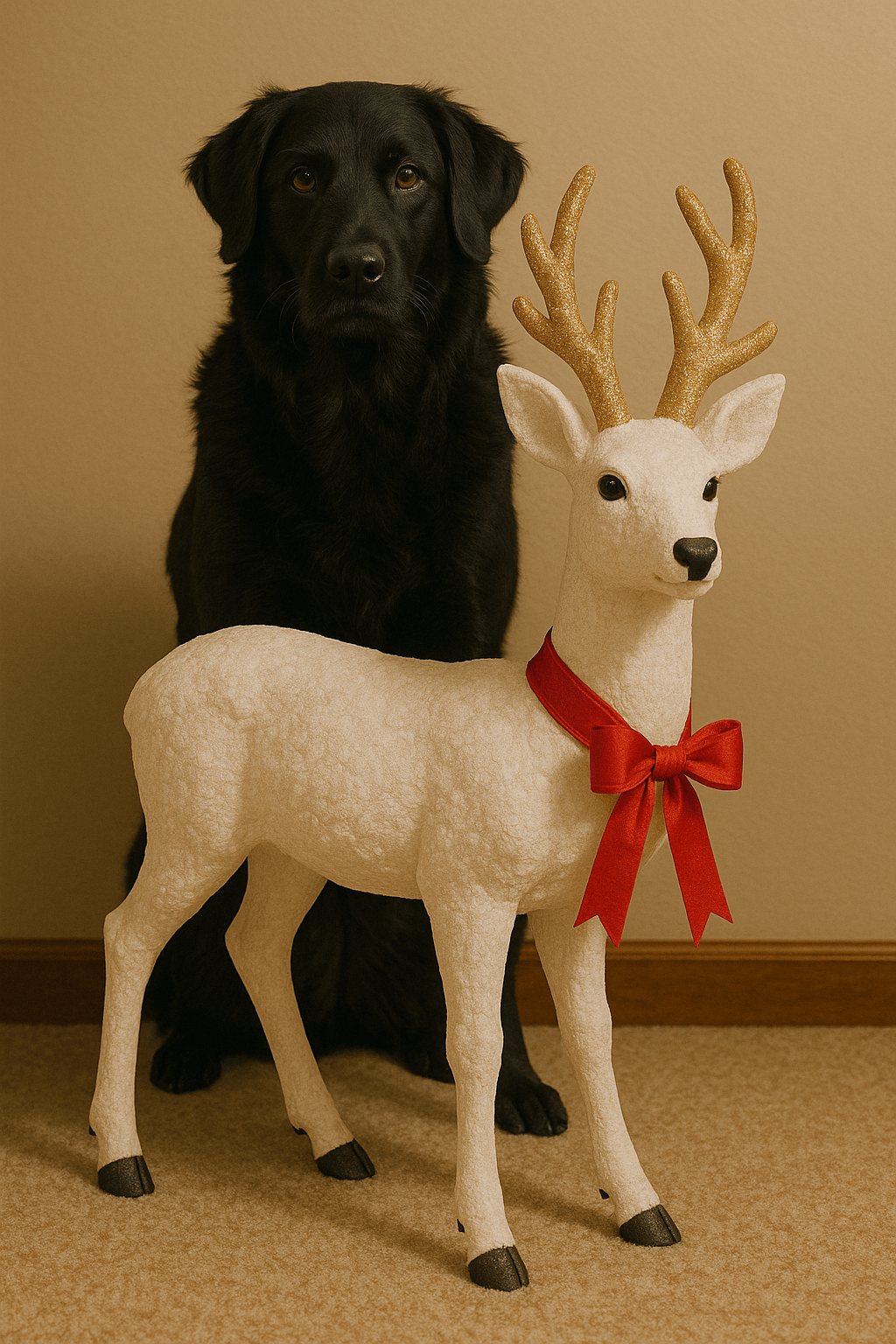
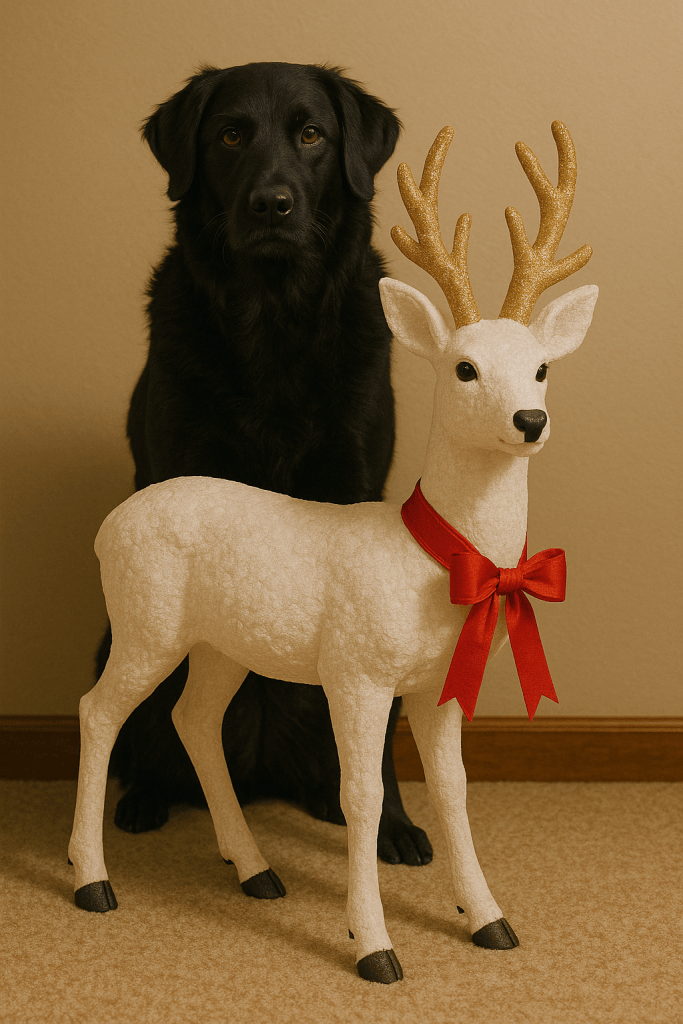
  • OMG, Elton is on the Reindeer

    OMG, Elton is on the Reindeer

    Mom was a Christmas freak.

    Hundreds of lights. Two trees. Stockings everywhere. Christmas music nonstop. And enough relatives to violate several fire codes.

    Even Bobo, our ¾ Collie, ¼ German Shepherd, wandered around with mistletoe hanging from his collar.

    Mom also solved the annual in-law Christmas war brilliantly.

    She held Christmas twice—Christmas Eve and Christmas Day.

    Same food. Same drinks. Same presents. Same relatives telling the same stories.

    If that didn’t work for your in-laws, it might be time to fold them back into the community.

    Christmas dinner was the one formal event in our otherwise completely informal family. Sport coats, dresses, cocktails by the fireplace, piano-playing nieces and nephews, followed by Mom’s traditional beef stroganoff.

    This went peacefully for nearly 40 years.

    Then came Elton John Rocket Man.

    Elton was my Bouvier des Flandres—a huge, shaggy Belgian sheepdog who looked like a cuddly bear.

    The grandkids begged me to bring him to Christmas.

    My wife at the time had a prediction:

    “Absolutely not. He’ll screw something up, and it’ll be my fault.”

    I promised Elton would stay downstairs with the kids.

    She reluctantly agreed.

    For a while, everything went beautifully.

    Even Mrs. C, our 98-year-old great-aunt twice removed, was comfortably settled beside the fireplace. Next to her were the stockings, the Nativity scene and a decorated Styrofoam reindeer.

    Then Elton escaped.

    He crept down the hallway, peeked into the living room and spotted the reindeer.

    Game on.

    Elton charged behind the sofa, slid behind Mrs. C and mounted that Styrofoam reindeer like he’d been waiting for Christmas all year.

    Mrs. C calmly tapped her cane.

    “I think we have a problem over here.”

    It took two of us to pry Elton off his new girlfriend.

    My wife was ready to launch herself through the thermal-pane windows.

    “We’re going home. NOW.”

    “Just let us get through dinner.”

    I locked Elton downstairs and hid the violated reindeer in the coat closet.

    Crisis over.

    Or so I thought.

    Dinner ended. Everyone bundled up to leave. Elton was standing innocently in the foyer.

    Then someone opened the coat closet.

    Elton spotted the reindeer.

    Round two.

    He charged like a linebacker, bowling over poor 98-year-old Mrs. C and heading straight for his Christmas sweetheart.

    The reindeer didn’t stand a chance.

    Neither did Mrs. C.

    Once again, it took a team effort to separate dog from décor.

    My family howled.

    My wife didn’t.

    On the way home, I got the speech.

    You know the one.

    Eventually—like all challenging in-laws—

    she was folded back into the community.

  • It All Started with Bill and Ginny

    It All Started with Bill and Ginny

    Of course, every crazy family has to start somewhere.

    Ours started with Bill and Ginny.

    They met on a blind date.

    Dad was quiet and passive. Mom was the life of the party—a little crazy and a great storyteller.

    After their third date, Mom started calling Dad “Wallet.”

    Dad couldn’t figure it out.

    Did she think he had money? Came from money?

    Finally, after several weeks, he asked:

    “Why do you keep calling me Wallet?”

    Mom stared at him.

    “How could a family with the last name Fold name their son Bill?”

    There was only one problem.

    His last name was Voll.

    Didn’t matter.

    For the next 60-plus years, every card Mom gave Dad was signed:

    Wallet.

    The Drake Hotel

    Mom and Dad didn’t exactly master the Catholic rhythm method.

    Nancy was conceived on their honeymoon, and the rest of us started arriving one after another.

    Years later, we asked Mom:

    “How did you end up with 11 kids?”

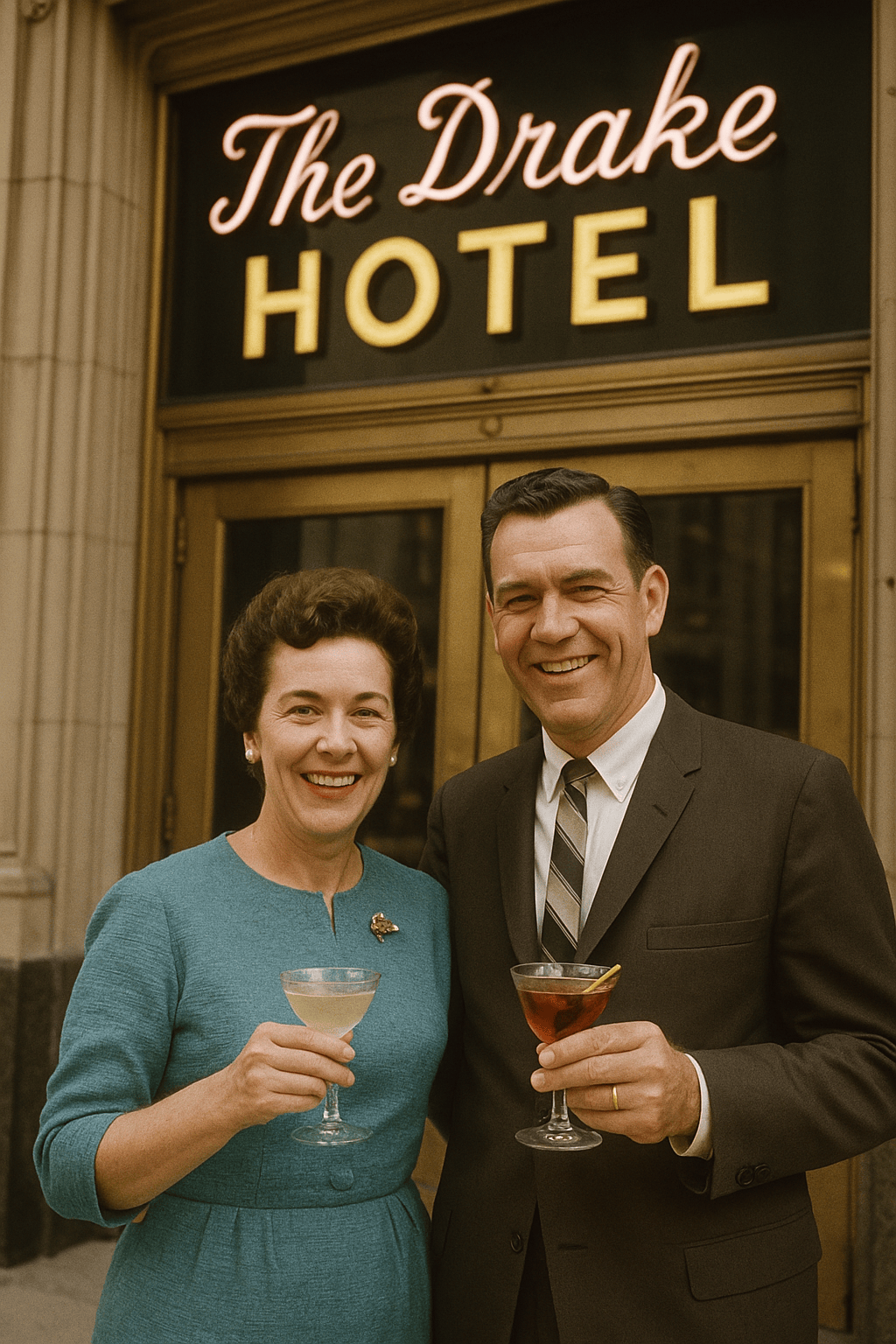
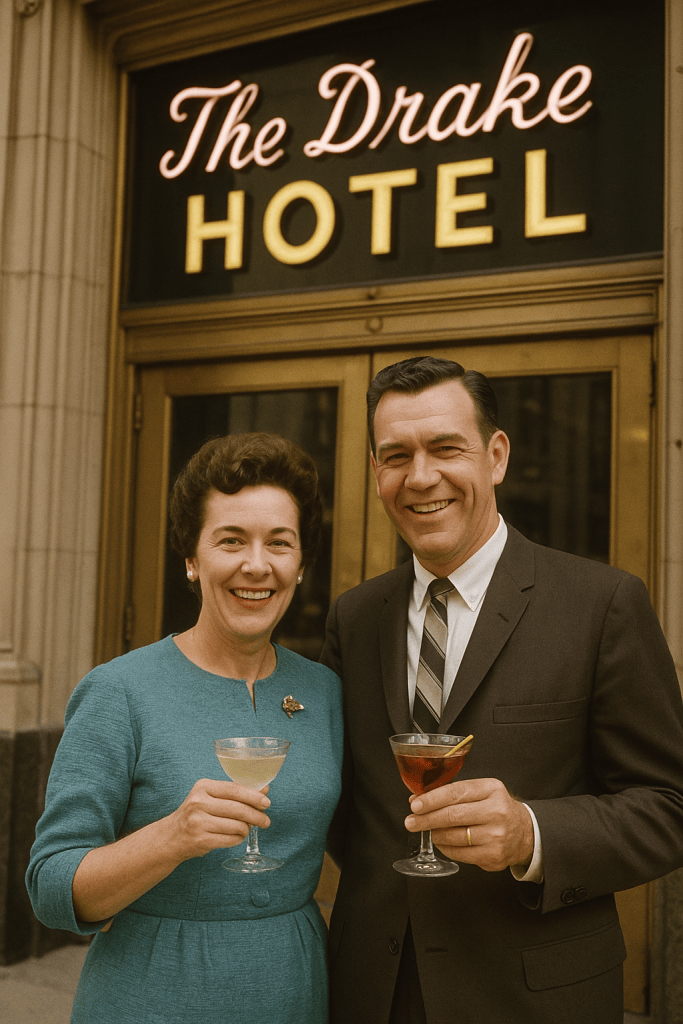
    She explained.

    “After Nancy was born, I had three months of no sleep, diapers and baby food. I needed a break.

    “So Dad and I would go to the Drake Hotel in Chicago for the weekend.

    “And every time I came home from the Drake, I was pregnant.”

    Apparently the Drake had an exceptionally effective turn-down service.

    Years later, we actually went back to the Drake bar for a conception celebration.

    And every Father’s Day we’d tell Dad:

    “Thank God you didn’t take piano lessons—or none of us would be here.”

    Then Came Nancy

    Nancy was the oldest.

    And apparently responsible for training the rest of us.

    At seven years old, she taught her younger siblings how to fill empty bleach bottles with water, add dry ice, screw on the caps, run—

    and watch them explode.

    At the next parent-teacher conference, the nun told Mom:

    “Nancy is a wonderful student. Very well behaved. But she has the wildest imagination.”

    Apparently the class had been asked what exciting things they’d done over summer vacation.

    Nancy answered:

    “I taught my brothers and sisters how to blow up bleach bottles.”

    It wasn’t imagination.

    Nancy Finds Religion

    Nancy also took her Catholic education seriously.

    She’d been taught Catholicism was the road to Heaven, so she worried about our Jewish neighbors, the Altmans.

    She brought them cookies because, as she explained:

    “They’re not going to make the bus.”

    Then came Good Friday.

    Nancy had us build a wooden cross and plant it in the backyard.

    Next she recruited Kim, our seven-year-old Protestant neighbor.

    She stripped him down to his shorts, tied him to the cross and smeared ketchup across his stomach.

    And who had a perfect view of the Crucifixion?

    The Jewish neighbors we’d just given cookies to.

    The Backyard Funeral Home

    Nancy also conducted funerals.

    Lots of funerals.

    Dogs. Cats. Birds. Chipmunks. Turtles. Goldfish. Guinea pigs.

    Even an alligator.

    Shoeboxes became caskets. We became mourners.

    Nancy conducted full funeral Masses wearing a bedsheet for vestments, drinking grape juice from a wineglass and distributing Wonder Bread communion.

    By the time we eventually sold the house, the backyard had so many graves it practically needed its own cemetery map.

    We had to resod the whole thing.

    And remember—

    Nancy was only the first of eleven.

  • Date an Undesirable,  See the World

    Date an Undesirable, See the World

    Dating in a family of 11 was an adventure in itself.

    With six girls and five boys, dating sometimes became a family partnership. The girls attended an all-girls Catholic academy and Catholic college. The boys went to Notre Dame. Eventually, one brother married one of our sisters’ roommates, and three of the girls married Notre Dame guys.

    Apparently, we didn’t believe in looking too far from home.

    The $1 Chaperone

    One of the girls I met and dated was from Cuba, and she was beautiful. We hit it off and dated for three years.

    But with nice comes a price.

    Her parents had two mandates.

    First, she could date only good Catholic boys.

    I passed that test.

    Second, there had to be a chaperone on every date.

    That was a little more challenging.

    Fortunately, I had ten siblings.

    I offered one of them $1 to ride along, sit in the back seat while I picked up my date, and make sure her parents saw that their daughter was properly chaperoned.

    It worked beautifully.

    For a while.

    Soon $1 wasn’t enough. The going rate climbed to $1.25, then $1.50, then $2.

    By the six-month mark, even $2 couldn’t get me a chaperone.

    I was crushed.

    Then Christmas came—and so did a miracle.

    My family gave me a folding dummy dressed in a Notre Dame sweatshirt and stocking cap.

    Problem solved.

    Before picking up my date, I’d pull the dummy out of the trunk, unfold him, put him in the back seat and fasten his seat belt.

    There he sat, faithfully chaperoning us.

    It worked like a charm.

    For three years.

    The Girl Who Was Never Going Anywhere

    Mom was concerned about my sister Jenna.

    She had no interest in dating or proms. While the rest of us were going out, Jenna was perfectly happy at home in her jeans and saddle shoes, sitting at the dining room table.

    Mom worried:

    “She’s never going to meet anyone, get married, go anyplace or enjoy life.”

    Then we boys brought a few guys home from college to party after a football game.

    One was a quiet accounting major with dark-rimmed glasses and a pocket protector containing two pencils and a pen.

    He went gaga over Jenna.

    They got married.

    He quickly moved up the corporate ladder, eventually becoming a senior vice president with a global insurance firm.

    And while the rest of us live modestly and plan a trip to an amusement park in Ohio…

    Jenna is in Monaco on a Mediterranean cruise.

    The Mom Smell Test

    Whether we liked it or not, anyone we dated eventually had to pass Mom’s smell test.

    If Mom decided a boyfriend or girlfriend was an “undesirable,” she could be remarkably cunning and creative in trying to uproot the relationship.

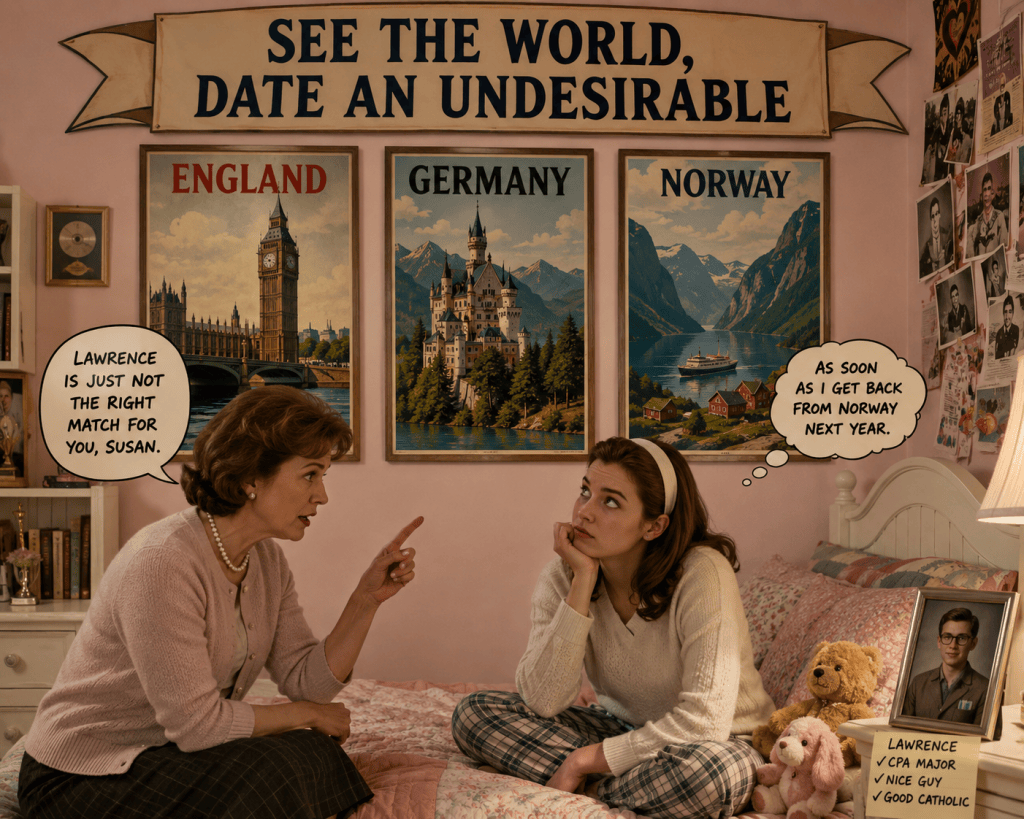
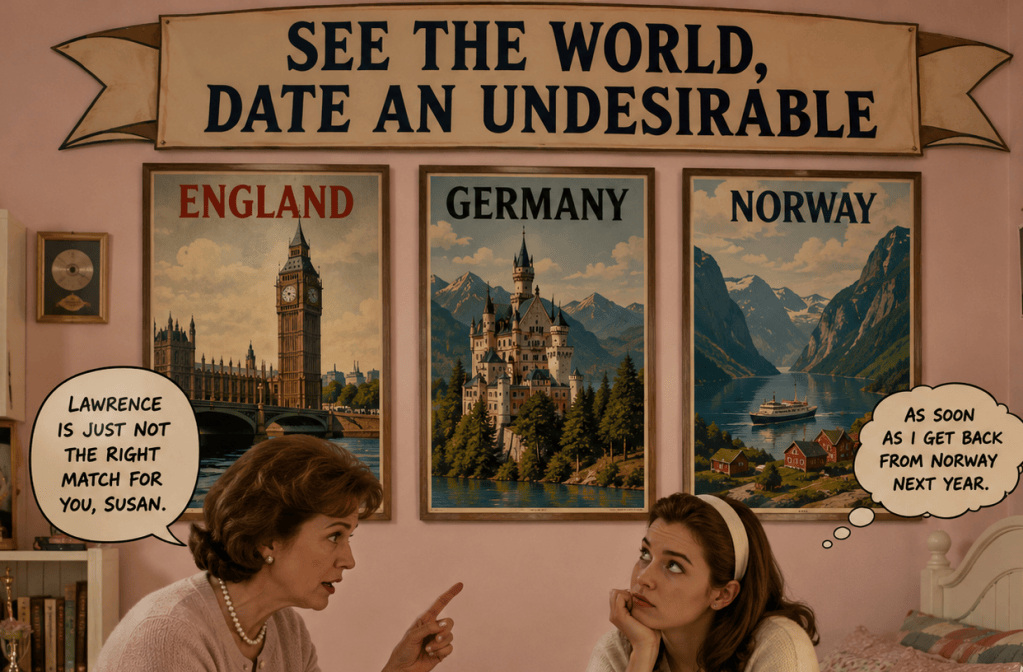
    My sister Susan dated Lawrence for four years.

    Lawrence did not fit Mom’s preferred profile.

    Mom tried coercion.

    Grounding.

    Strict curfews.

    The silent treatment.

    Nothing worked.

    So Mom changed tactics.

    “Susan, we think it would be a great experience for you to spend six months abroad in a student exchange program.”

    Susan jumped at the opportunity.

    Off to England she went.

    Six months later she came home.

    And went right back to Lawrence.

    Mom wasn’t finished.

    “Susan, here’s another wonderful opportunity to learn and travel in Germany.”

    Off to Germany she went.

    She came home.

    Back to Lawrence.

    By now, the rest of us had figured out Mom’s international dating strategy.

    One of us finally asked:

    “Susan, are you really going to break up with Lawrence?”

    Susan had her answer:

    “Yes. As soon as I get back from Norway next year.”

    And that became one of the great lessons of growing up in our family:

    Date an undesirable. See the world!

    You can’t make this stuff up.

  • Will Dancing Reduce My Cholesterol?

    Will Dancing Reduce My Cholesterol?

    At my latest six-month Medicare checkup, I passed the memory test with flying colors.

    “Dog… Table… Water.”
    Three for three.

    Unfortunately, my cholesterol test wasn’t nearly as impressive.
    My doctor looked over his glasses and said, “John, you’ve got to get that cholesterol down. A low-carb diet and exercise are your best friends. Are you exercising?”

    “Absolutely.”

    “Great. How often? “

    “Every day“

    “How Far?”

    (Didn’t want to compromise my integrity) “to the refrigerator”

    He didn’t even smile.

    “Exercise doesn’t have to be boring,” he said. “Find something you enjoy. Dancing is one of the best forms of exercise.”

    Now that sounded promising.

    Carol and I both love music. Back in the late ’70s I considered myself a certified Disco Duck. We figured dancing would lower my cholesterol and give us something fun to do together.

    A few days later we spotted an ad on a paper placemat at a local diner.

    FREE INTRODUCTORY DANCE CLASS

    Perfect.

    We walked in expecting couples gliding across the floor to music from the ’50s, ’60s and ’70s. That would be great for us to dance the night away.

    But..

    Instead, we found about 35 women… and maybe 15 men.

    The instructor clapped her hands.

    “Welcome everyone! Tonight we’re going to learn… the Box Step!”

    The room immediately became…
    “One… two… three… together!”
    “One… two… three… together!”

    Best I could do was a trapazoid.

    I danced with Carol once and stumbled with my Trapezoid steps with 32 other women

    I looked at Carol.

    Carol looked at me.

    Neither of us said a word.

    We were thinking exactly the same thing.

    This dog don’t hunt.

    We quietly backed toward the door before anyone could recruit me as the 33rd Dance Partner

    Ten minutes later we were sitting at the Tiki Bar.

    The band was playing oldies.

    We ordered margaritas.

    Before long we were dancing, laughing, and singing along to songs we actually knew.

    Cholesterol: No change.

    Margaritas and dancing to the oldies? Off the Charts